Meet Patrick White, Australian finalist of the eBay Circular Fashion Fund 2026.

eBay named Ragpiq a regional winner in eBay's 2026 Circular Fashion Fund. Co-founded by Patrick White and Gwynn Kijkanakorn,  two uni friends who spent years throwing everything at the wall before landing on the problem worth solving.

Ragpiq is a platform that connects clothing resellers with people who want their wardrobes gone but have no appetite for the work of selling them. By outsourcing the selling to people who are actually good at it, Ragpiq is tackling one of the most entrenched inefficiencies in second-hand fashion: that most people have simply given up on reselling altogether.

A few weeks ago, Patrick travelled to New York City to pitch alongside the global finalists. We caught up with him to hear more.

Could you share some insights into your background and the journey that led you to start Ragpiq?

Gwynn and I met at uni. We got put together on a consulting internship, clicked like no tomorrow, and ended up both being the dux’s of our class. We were both resellers from a young age and both pretty entrepreneurial, so once we realised we worked well together, the question was never if we'd build something, it was what.

We spent the next two to three years throwing absolutely everything at the wall to see what would stick, all of it circling one stubborn idea: secondhand sucked for a lot of people, and there had to be a better way to do it. We built three resale apps. We opened our own physical consignment warehouse in Thornbury that held a whopping 2,000 items at its peak. We basically lived in that building, and every tool and bit of software we made there is what we've since rebuilt into Ragpiq.

The deeper drive is that we both believe innovation is the best industry you can be in. When you look at how asset appreciation has outpaced income over the last 60 years, building something genuinely valuable to society beats a 9-to-5 every time. We'd rather be broke for five years out of uni, get comfortable being broke, and build something that matters.

Take me back to that pitch room. What was it really like, how did you prepare, and what would you tell other businesses heading into pitching opportunities?

A fever dream, honestly. But I felt so ridiculously prepared that it actually felt right. I'd butchered my last two live-audience pitches, so they do say, third time's the charm, but really I think I'd just gotten sick of being nervous and not being myself.

Getting there was its own comedy. When I realised I'd booked flights landing 12 hours before the event, I felt like the dumbest smart founder heading to New York. I slept 12 hours on the plane, then had to somehow find another 8 that night, over room service steak. Pretty scary maths. But the venue saved me: a gorgeous old Georgian hotel in the fashion precinct, right opposite Broadway and all the little cafes. The pitch room itself was a cosy, tavern-style space with low ceilings and plush furniture, so it felt less like a boardroom and more like a comedy night. I'd planned exactly one laugh, and thankfully it landed.

On preparation, it was AI, AI, AI. Every single word got scrutinised by multiple language models, every slide rebuilt and re-rendered in Claude Design until it was almost too perfect. The biggest lesson I learned about memorising a long pitch is that it has nothing to do with how hard you cram and everything to do with how early you start. The number of nights you leave between memorising and performing is what counts, because your mind coagulates and processes while you sleep. That's what makes each slide feel like second nature.

So my advice to anyone heading into a pitch: start ridiculously early, and practice in front of actual people, because pitching to a room is a completely different animal to running lines alone. One tactic I swear by is spiking your heart rate before you rehearse, do push-ups or run a lap outside first. It recreates the adrenaline you'll feel on the day, so the real thing doesn't catch your body off guard.

What inspired the idea of flipping the reselling model?

Two things: the figures, and bitter personal experience. We hated reselling. It's fun the first time, then it's just labour, and eventually you're sitting there going, why am I effectively working a $20-an-hour hospitality shift to sell my own jumper?

Then the numbers backed up the feeling. Around 70% of people's wardrobes go unworn. About 39% have outright given up on reselling. And the number one reason people resell isn't to make money, it's to declutter. So you've got millions of people who genuinely want their clothes gone but have zero appetite for the work of selling them. The obvious answer was to stop asking them to do it. Outsource the selling to people who are actually good at it and enjoy it, and let everyone else just enjoy a tidy wardrobe and a payout.

What do you think about the environmental impact, and does that mission shape your decisions as a founder?

It shapes everything, but I try to be clear-eyed about how it works. The environmental impact is real: every garment we keep moving is one that doesn't get replaced by something new. The average Australian wardrobe is sitting on around $4,000 of unworn clothes, and most of it is destined for a bin bag eventually.

But I've also learned that people don't change behaviour for the planet alone. Around 60% of younger shoppers say affordability is their number one reason for buying secondhand, and most of that generation flat-out doesn't trust brand sustainability claims anymore. So we don't lead with guilt. We make the sustainable choice the easy, profitable, slightly addictive one, then let the environmental upside come for free. If we get the convenience right, the circularity takes care of itself at scale. That's the decision that matters.

How do you build and maintain that trust on both sides of the marketplace?
The most important thing is security: your items are protected by Ragpiq. Our resellers are carefully vetted and go through a scrutinised onboarding process, so you know you're in safe hands. That's exactly why a moderated platform makes more sense than fending for yourself, researching strangers and hoping for the best. It's the same problem Uber solved. People didn't want to climb into a car with someone they'd never met, but once enough people trusted the system, and the system held a genuinely high standard of service, you reach a kind of bliss. That's what we're reaching for.

We build that trust structurally rather than just promising it. Consignors keep ownership of their items until they sell, so they're never handing over value and hoping for the best. Resellers are vetted and local, not anonymous accounts on the other side of the country, which is where hyper-local really matters: there's real accountability when the person handling your wardrobe is only a few suburbs away. And we keep both sides visible to each other through the whole process, so nobody is left wondering what happened to their bag or their stock.

What does being selected as a finalist mean to your business, and what are you hoping the funding will unlock for Ragpiq?

First, validation. We had so much warm, supportive feedback from people in New York, and trust me, they're every bit as blunt as we are in Australia. They give it to you straight, no emotion. That's exactly why it meant so much, because it told us what we're building isn't just an Australian fix. It's universal, and it's a seriously good way of solving a global problem.

I'll be honest though: we didn't win the final investment, and the reason was traction. We simply didn't have enough of it yet. Far from being a blow, that's been clarifying. It means the job now is to put our heads down, build the flywheel and the system, and obsess over every single customer and interaction so we're ready to win the next one. The whole experience taught me that fundraising, networking and the operational glamour is the devil dressed in fancy clothes, always trying to lure you away from the only things that actually matter: your customers and your product. That's where we'll be 90% of the time for the foreseeable future.

The funding gives us serious runway to push our AI software further, and to completely rebuild our social media and branding so it genuinely speaks to our audience. A good chunk will also go into meeting resellers, boutiques and secondhand stores right across the country. Honestly, wining and dining the best operators in the business is one of the best uses of our money I can think of. So if you're reading this and you're scaling your resale, come find us. You won't regret it.

Discover more about Ragpiq here.


Circular Sourcing: eBay Circular Fashion Fund 2026 Australian Finalist

eBay named Circular Sourcing a regional winner in eBay's 2026 Circular Fashion Fund. Founded by Courtney Holm, who spent eight years building the circular fashion label A.BCH before pivoting to tackle the industry's material waste problem at scale.

Circular Sourcing is a platform building the data infrastructure behind physical textiles, making surplus materials visible, accessible and commercially viable for brands and designers.

A few weeks ago, Courtney travelled to New York City to pitch alongside the global finalists. We caught up with her to hear more.


Could you share some insights into your background and the journey that led you to launch Circular Sourcing?

I founded circular fashion label A.BCH in 2016 at a time when sustainable fashion had a few major players, but no one was yet talking about circular design. Over the next eight years, I built A.BCH from concept to beloved brand in Melbourne; we established our own factory and eventually manufactured 100% of our products in-house through an on-demand model. It was through A.BCH that I gained a deep understanding of supply chains, materials and manufacturing. It was also how I saw the enormous waste issues up close. It dawned on me that whatever little universe we created with A.BCH wouldn’t have an iota of impact on the industry at large. So we started small, just as a little esty store, selling surplus here and there for ourselves and then our brand friends, and eventually with a co-funding from A.BCH and Sustainability Victoria and contributions from Full Circle Fibres, MTK Australia and The Social Studio, we built a central platform for this to scale.

That led us to realise the problem was less about surplus being a problem needing to be solved downstream and more that the industry extracts and grossly undervalues important material assets simply because the data behind them is lost. We realised that we could build the data infrastructure behind physical textiles and that's exactly what we're doing today.

You were one out of 8 successful global finalists for the eBay Circular Fashion Fund so take me back to that pitch room. What was it really like standing in front of industry experts, how did you prepare for that moment, and what would you tell other businesses heading into pitching opportunities?

This was honestly one of the most intense pitches I've ever prepped for. The judges are all seriously iconic people in the industry; they know the problem deeply and they will scrutinise every word much more than a generic investor ever could. The pressure was real, including from traveling halfway around the world! But I think I was fairly well prepared..

Prep looks like getting your deck right so the visuals can help you share your story, not distract or cause confusion. It looks like practising a lot, because when you only have 5 minutes, every word you say counts. It's also getting to the point as soon and succinctly as possible. And it's managing nerves and pressure, though the other founders in the competition were so supportive and it made the whole process feel really good, regardless of who won the final prize.

You founded the brand A.BCH in 2017 and built it into a world-leading example of circular design, before making the strategic decision in early 2024 to focus on building Circular Sourcing. What was the defining moment that convinced you the industry needed a dedicated platform for surplus textiles rather than another circular fashion brand?
I guess I talked about it a little already, but I think it was the moment when the scale of impact hit me. It was like, could I dare to think bigger? Globally? Transformationally? Could I go from being heads down, running around and doing my own creative thing in my own little world, to opening myself up to the very public, scrutinised, and tumultuous life of a technology founder where my business is far more likely to fail? Ultimately I chose yes. It hasn't been easy, but it was the best decision I could have made.

Circular Sourcing’s mission is to divert materials from ending up in landfill. How do you go about shifting the mindset of brands and manufacturers from seeing surplus as a liability to treating it as a premium material opportunity?
You know, the cool thing about surplus is, once the data is restructured and the product is made visible, it's actually very easy to get brands on board to use it. It's available immediately, enabling speed to market, it's unique, providing endless story telling opportunities, and the material and impact data work has all been done for them, so it's pretty much a win-win. Brands are coming to us already. What is more challenging is getting brands to think and design for the full circular lifecycle, that is our real challenge and where we are heading, big picture.

You deliberately use the term "material streams" rather than "waste streams," viewing all material as a valuable resource. How does that language and philosophy shape the way Circular Sourcing is designed both as a platform and as a business?
I think we just have particular phrases and language that we lean into at Circular Sourcing. The reason why is that we are building a company culture, and a big part of culture is language. We’re also industry operators by trade. Certain words and phrases make supply chain folks bristle. The way things are framed is so important not only for shaping the vernacular but for shaping the actions those words invoke. The call to action for revaluing resources is a lot more powerful than reducing waste.

What does being selected as a finalist for eBay’s Circular Fashion Fund mean to your business and what are you hoping the funding will unlock for Circular Sourcing?

It's epic. I feel so lucky to be building this business at this moment in time. It’s a privilege to be shaping the future industry we want and need. Being selected for the fund is a resounding YES to our central thesis. While I don't know exactly what it will unlock yet for Circular Sourcing, I’m open to the possibilities of who will come alongside us next, because one thing I know for sure is this is not something we can go at alone. So I'm excited for who will join us, partner with us, invest with us next – and what that unlocks.

Discover more about Circular Sourcing through their social media channels or official website.

BlockTexx And Asia Pacific Fibers Collaborate To Bring A Circular Future For The Global Textile Industry Closer To Reality

BlockTexx, an Australian clean-tech leader in textile resource recovery, has partnered with integrated polyester manufacturer Asia Pacific Fibers to accelerate the commercialisation of Textile-to-Textile recycled polyester filament yarns. This collaboration signals an important step for the industry: the move from small-scale innovation toward reliable, scalable circular inputs that can integrate directly into existing global supply chains.

The road to sustainability is a massive challenge for the fashion and textile industry with less than 1% of the global fibre market sourced from pre- and post-consumer recycled textiles. Global fibre production reached 124 million tonnes in 2023 and is projected to rise to 160 million tonnes by 2030 (Textile Exchange Materials Market Report 2024).

Polyester and cotton remain the most widely produced fibres, accounting for 77% of global fibre production. When blended these fabrics become harder to recycle and reuse as they must first go through a separation process.

BlockTexx uses its S.O.F.T.™ (separation of fibre technology) process to extract high value raw materials from post-consumer unwanted blended textiles and clothing to create PolyTexx® and CellTexx® for remanufacture into new products including fibre, fabric and trims.

Mr V. Ravishankar - CEO of Asia Pacific Fibers said the partnership with BlockTexx further reflects the company’s belief in the promise of a sustainable future.

“Our flagship product Re-petitive, made from PolyTexx® rPET exemplifies our commitment to sustainability, offering our value chain partners a truly circular solution that minimises water usage, chemical pollution, and landfill waste.” Mr. V. Ravishankar said.

“By closing the loop on end of life textiles, we empower our customers and brands to meet their environmental goals while maintaining uncompromising standards in design and performance.”

Through its end-to-end ecosystem for unwanted textiles and clothing, BlockTexx is actively driving a global movement towards a more circular economy for its partners and customers.

Graham Ross, Co-founder of BlockTexx said, “BlockTexx’s mission has been to develop low emissions technology to deliver commercial scale recycled products that are price comparative to virgin products.”

“We value the technical development expertise of the team at Asia Pacific Fibers and we appreciate their commitment to being an industry driver of Textile-to-Textile products. We are delighted to showcase these fabrics in Europe in October.”

Re-petitive yarns are available in raw white, dope dyed and with inherent functional features such as stretch, moisture management, anti-UV, anti-microbial, anti-dust mite and biodegradability. Made from 100% recycled polymers, the yarns can be curated to include 10% to 50% textile-waste content, depending on customer requirements. They are certified under OEKO-TEX, GRS and RCS standards as part of sustainability compliance.

Blocktexx and Asia Pacific Fibers will work together to develop a variety of commercially ready filament yarns and co-market these products to the global fashion and textile industry.

Blocktexx is actively working with global fashion and textile brands but excited to make Textile 2 Textile product available to Australian fashion and retail brands. Contact di@blocktexx.com for an introduction to Re-petitive yarns.

Studying Opportunities: The Centre of Excellence Programs

The Centre of Excellence in Sustainable Fashion & Textiles has an exciting line-up of professional short courses running across October and November 2025. From CLO 3D training to sustainability strategy development, these courses are led by industry experts and academics at the forefront of fashion’s transition to a more sustainable future.

October & November Course Schedule

14 October – Intro to CLO 3D (Online)
Delivered by Tracey Willis, this online course introduces you to CLO 3D, one of the leading software tools in digital fashion design and prototyping. 

16 October – Developing a Fashion Sustainability Strategy and Roadmap
Led by Dr Clara Vuletich, this course supports businesses and professionals in building a clear sustainability strategy and roadmap.
💡 Discounts available:

21 October – Intro to Fashion & Sustainability
Led by Laura Washington, Head of School, Fashion Design Studio (TAFE NSW), this 6-week program blends 2 hours of live online lectures each week with 2 hours of self-directed study. Explore the foundations of sustainable fashion and its practical applications.
💡 Discounts available:

10 November – Digital Pattern Cutting Techniques with CLO 3D
For those who have completed Intro to CLO 3D, this advanced course with Tracey Willis takes your digital pattern-making to the next level. 

AFC Member Perks

AFC Members enjoy 15% off selected courses on the following: 

 View all courses: sustainablefashioncentre.com/courses

AFC Members, access your perk here: ausfashioncouncil.com/member_perk/uts-sustainability-short-courses

Don’t miss the chance to learn from leading educators and connect with a community driving change in the fashion industry.

A Game-Changer for Sustainable Fashion & E-commerce: Better Packaging Co. & RCYCL Partner for Dual Recycling Impact

Better Packaging and RCYCL are pioneering a new solution to waste, enabling eCommerce customers to reuse their POLLAST!C mailers to return unwearable garments for recycling, closing the loop on both clothing and packaging waste.

Under this innovative partnership, brands ordering customised POLLAST!C mailers can now add a RCYCL QR code and messaging to their mailers. This encourages the brand’s customers to cleanse their wardrobes responsibly: scan, fill with old clothes, and drop off at RCYCL's collection points nationally. Used POLLAST!C mailers are collected and recycled as part of the process also, addressing the lack of soft plastics recycling options, while keeping materials in circulation.

Each bag returned via the RCYCL system is weighed and sorted, before being passed on to verified recycling partners. This will give brands unique data on how much clothing they have helped divert from landfill, simply by integrating a QR code into the design of their mailers. Packaging, an expense that businesses are already accustomed to, now provides an opportunity for brands to encourage consumers to dispose of clothing responsibly.

The impact is twofold: unwearable textiles are diverted from landfill, and the POLLAST!C mailers themselves will be recycled. This initiative is more than just recycling; it is a strategic step towards a truly circular fashion future, aligning with major industry goals like those of Seamless Australia.

POLLAST!C mailers are made from 100% recycled Ocean Bound Plastic pollution collected from coastal communities throughout Southeast Asia with no formal waste management infrastructure. For Better Packaging, whose mission is to combat pollution, poverty, and climate change through packaging, this partnership is a natural evolution of their purpose-led innovation.

“By combining RCYCL’s expertise in textile collection, sorting and recycling with our packaging innovations, we are offering a simple, impactful solution for apparel brands and their customers,” explains Kate Bezar, Better Packaging’s co-founder. 

RCYCL, known for its mission to make textile recycling as intuitive as purchasing new clothing, provides a three-step process:

  1. Buy, Sort & Fill: Customers scan the RCYCL QR code on the POLLAST!C mailer, purchase the RCYCL service, and fill the bag with worn-out or unwearable items.
  2. Confirmation & Send: A confirmation code is provided to mark on the bag, which can then be returned via local drop-off points nationally.
  3. Transform & Renew: At RCYCL’s facilities, clothing is sorted by fiber, and sent to vetted recycling partners to be converted into products such as carpet underlay or new yarn. Each POLLAST!C mailer will be collected and handed back for responsible recycling by Better Packaging Co.


Both Better Packaging Co. and RCYCL are supporters of Seamless (Australia’s clothing stewardship scheme) reflecting a shared commitment to creating circular solutions for the fashion and e-commerce industries. This initiative aligns perfectly with Seamless’s goal to dramatically reduce clothing waste, encouraging Australians to adopt positive practices around clothing acquisition, use, care, and disposal.

“With over 200,000 tonnes of clothing ending up in landfill each year, a shift needs to happen within the customer mindset,” says Belinda Paul, Founder of RCYCL. “As a business we are always looking for novel ways to tackle this problem, if we can make recycling our unwearable garments as intuitive as buying new clothes, we could all make an immediate difference to our landfill rates with one simple action.”

Better Packaging Co. and RCYCL are inviting forward-thinking brands to join this initiative and lead the charge towards a circular fashion economy. By opting into this program, businesses can offer customers a tangible way to recycle while reinforcing their own sustainability commitments. 


AFC MEMBER OFFER

As an exclusive benefit for AFC members, Better Packaging Co is offering 15% discount off all products. This is limited to one use per customer and applies to all products except ‘Low MOQ Custom POLLAST!C Mailers’.

To access your member offer, click the link here. 


Future Makers: Amy Low, CEO of The Social Outfit

For our latest Future Makers feature, we speak with Amy Low, CEO of The Social Outfit,  the values-led social enterprise redefining the intersection of fashion, ethics and opportunity.

Through career pivots, leadership insights, and heartfelt reflections, our conversation with Amy reveals the transformative power of purpose-driven work.


1. What was your first start in the industry and can you share your career journey? Was there a pivotal moment in your career that led you or pushed you to where you are today? 

My introduction to the industry was working in a store in The Strand Arcade in Sydney. I was a casual retail staff member, selling formal dresses for weddings and special occasions. When a group of women all try on the same dress in a colour they didn’t choose, you learn quickly about dress fittings and customer service.

I came back to the industry to start a shoe business with a friend. We made mens shoes with artisans and Italy, beginning a steep learning curve in supply chain management, sales, marketing and business operations. Friends and family told me that I was brave to leave a career as a lawyer to start a shoe brand. Whilst there was a lot of naivety about what was involved, I knew that I wanted to pursue something creative and put something into the world that was beautifully made.

2. Are there any mentors or influential figures who played a key role in your leadership style? 

I have been an avid supporter of The Social Outfit since it began, joining the Board in 2015. 

Seeing leadership in action with Founder Jackie Ruddock, and Chair David Hardie, gave me a new way to think about values and purpose. They are both clear-eyed, compassionate and approachable. They put people first in a way I haven’t seen often in the corporate world. Now that I am CEO, I can see more clearly how their leadership style has shaped mine.

3. What has been the biggest challenge you have faced on your pathway, and how did you overcome it? 

There can be so much turbulence in the workplace. Like so many friends in the industry, I’ve been made redundant before, and felt lost about what to do next. When a job change is not voluntary, the job hunt seems even more daunting and competitive. It forced me to think about what my strengths are, and where they might be of greatest value. It helped to ask people for advice, to get confident about what I bring to the table, and opportunities I may have overlooked.

4. Our industry is 76% female, however this is not the case at executive level. Do you believe the Australian fashion industry has evolved over the years, particularly in its support for women leaders? What can we all do to help change this statistic? 

There’s more that can be done to support the careers of female leaders, particularly in the business side of the fashion industry and in operational decision making. Women are incredibly resourceful, resilient and creative - all excellent entrepreneurial traits of benefit in the fashion industry. 

Done with intention, simple actions such as inviting a younger colleague to attend a decision making meeting can offer invaluable experience and signal what leadership opportunities are ahead.

5. What's one piece of advice you’d share with someone aiming to follow in your footsteps? 

Stay curious and ask lots of questions. There are so many opportunities, if you spend some time learning about how it all fits together.


Find more about The Social Outfit here.


New Default Energy Rates Announced: How to Stay Ahead of FY26 Price Changes with Choice Energy

The end of the 24/25FY is here, which means energy prices are set to increase and could have a direct impact on your operational costs.

From July 1, 2025, for businesses in Queensland, New South Wales, and South Australia, and August 1, 2025, for those in Victoria and Tasmania, new energy Default Market Offers (DMO) and Victorian Default Offers (VDO) will come into effect.

While these "default offers" act as a safety net, capping prices for businesses on standard retail plans, they often don't represent the most competitive rates available. The announced changes highlight a mixed outlook, with some regions facing significant price adjustments.


What's Changing and Why It Matters:

The Australian Energy Regulator (AER) and Victoria's Essential Services Commission (ESC) have finalised their default offer determinations for the 2025-26 financial year. Factors like wholesale energy costs, network charges, and evolving market dynamics drive these changes.

These default rates are indicative; many energy retailers are also adjusting their market offers. This means that even if your default offer sees a smaller increase, a better deal could be waiting in the market.


Your Proactive Energy Strategy: Two Essential Steps

Every dollar saved is a dollar reinvested into your business. Proactively managing your energy costs is no longer optional – it's essential.

  1. Review Against FY26 Offers: Choice Energy is already equipped with the latest FY26 energy offers from various retailers. This is your immediate opportunity to compare your current FY25 pricing against these new market offers. Don't assume your existing plan is still competitive; a tailored market offer could unlock significant savings.
  2. Conduct a Network Tariff Assessment: This is often the most overlooked and impactful area for savings. Your network tariff is the charge for using the poles, wires, and infrastructure that delivers electricity to your premises, and it can account for over 60% of your total energy bill. These charges are set by your electricity distributor and are based on your usage patterns. If your business has evolved – perhaps with new machinery, altered operating hours, or seasonal shifts – your current network tariff might be costing you unnecessarily.

    A detailed Network Tariff Assessment involves analysing your historical energy usage (ideally 12 months of interval data) to determine if a more cost-effective tariff structure is available. This could mean switching to a time-of-use tariff to leverage off-peak periods or optimising demand charges, which are based on your highest usage spikes. Choice Energy offers free network tariff reviews, working directly with your electricity distributor to manage any necessary changes seamlessly. 

AFC MEMBER OFFER

As an exclusive benefit for AFC members, Choice Energy is offering $1500 cashback when you install a 20kW or larger solar system, plus a complimentary energy bill health check to help reduce your electricity and gas costs.

To access your member offer, click here.

Media Release: Landmark Partnership Australian Fashion Council And R.M. Williams Unite To Rebuild Australia’s Fashion And Textile Manufacturing Sector

Tuesday, 6th May, 2025, Sydney, Australia: The Australian Fashion Council (AFC) and R.M. Williams have today announced a landmark partnership to develop Australia’s first-ever National Manufacturing Strategy for the fashion and textile industry. This strategic collaboration will mobilise a nationwide effort to rebuild and future-proof the sector, unlock Australian-made capability and enable a globally competitive industry powered by innovation, advanced technology and next-generation skills. 

With 97 per cent of Australia’s $28 billion fashion industry produced offshore, this landmark initiative comes at a pivotal time, as growing trade uncertainty and fragile global supply chains underscore the need to diversify production and strengthen sovereign capability in apparel and footwear manufacturing. 

The strategy will address three interconnected challenges: safeguarding the industry’s $7.2 billion export contribution in an unpredictable global landscape; tackling a deepening skills crisis and widespread technical shortages, with the median age of skilled manufacturing workers now 57; and preserving a vital source of women's economic participation, with the industry employing 500,000 Australians - 77 per cent of whom are women

Research commissioned by the Australian Fashion Council estimated that for every $1 million invested in returning production to Australia could generate approximately $1.2 million in economic returns through job creation, technology, strengthened local supply chains, and reduced import dependencies, further strengthening the business case for strategic reinvestment in domestic manufacturing capabilities.

Jaana Quaintance-James, CEO of the AFC, said: “We’re incredibly proud to partner with R.M. Williams - an iconic brand that proves Australian manufacturing isn’t just possible; it’s profitable, scalable, and vital to our future. Our sector is at a critical tipping point. Through deep industry consultation, we’ve identified an urgent need for a National Manufacturing Strategy - one that safeguards jobs, restores technical capability, and strengthens our global competitiveness. Rebuilding local manufacturing will deliver far-reaching economic and community benefits - from job creation and skills development to regional growth and greater participation for women. This is about securing Australia’s fashion and textile future in an increasingly uncertain global market both economically, socially, and sustainably.”

Tara Moses, Chief Operating Office at R.M. Williams adds: “We’re honoured to step into this role at a time when local manufacturing is facing both challenges and opportunities. By partnering with the AFC, we hope to tackle systemic factors which limit growth and capability and inspire other Australian brands to produce locally. We believe that quality products made by skilled Australian hands will always be valued, and we’re excited to contribute to the AFC’s vision for a National Manufacturing Strategy that supports jobs, skills, and sustainability.”

The National Manufacturing Strategy will take shape through six structured industry consultation sessions conducted across Sydney, Melbourne, Brisbane, Perth, Adelaide, and online starting Monday, 5th May 2025 in Adelaide. 

These sessions will bring together manufacturers, brands and educators to map capabilities, identify critical gaps and develop targeted recommendations for both industry and governments. Following industry consultation, the AFC and R.M. Williams will engage with key stakeholders to implement the strategy, which will be released in late 2025.

The AFC invites all Australian textile, clothing, and footwear manufacturers and industry stakeholders to join this historic initiative. To ensure the National Manufacturing Strategy represents the diverse needs of businesses across the sector, the AFC is calling on all industry participants to register their interest: here.

-ends- 

For further information and imagery:

Elizabeth Anderson

Head of Policy and Communications, AFC

eanderson@ausfashioncouncil.com +61 424 991 231

____

ABOUT THE AUSTRALIAN FASHION COUNCIL:

The Australian Fashion Council (AFC) is a not-for-profit and the peak body for the Australian fashion and textile industry, representing the sector for over 70 years. AFC members are Australian founded or majority owned businesses involved in producing fabric, clothing, footwear or accessories, including individuals that contribute creatively and economically to the Australian fashion and textile industry. The AFC champion and advocate for a prosperous and creative Australian fashion and textiles industry, with the purpose of building a vibrant, inclusive ecosystem for our member community through education, collaboration and innovation.

RMIT Launches New Guide to Accelerate Circular Fashion Design

The global fashion industry is consistently cited as one of the most environmentally destructive and polluting sectors.

The new guide, Refashioning: Accelerating Circular Product Design at Scale, outlines steps for makers to transition from linear to circular design, focusing on maximising the lifespan of products and materials. Project lead and Dean of RMIT’s School of Fashion and Textiles, Professor Alice Payne, said the guide challenged traditional design thinking with practical steps to enable change.

“This guide provides a systematic and methodological approach to implementing circular clothing design in a way that all organisations can implement, regardless of their size,” she said.

“Based on extensive research with the industry, we’ve created practical steps businesses can take to improve the circularity of their outputs.

“Although other circular design guides are available, Refashioning is unique in providing a systematic methodology that enables designers to both slow the flow and close the loop.”

The dominant production and consumption method used by most brands today creates clothing for a linear economy - a system of take, make and waste. To switch to a circular method that allows materials to be recycled, critical aspects such as material choices, product purpose and use, durability, and end-of-life options need to be considered early in the design process.

Funded by Sustainability Victoria, the guide’s production was a collaboration between RMIT, Country Road Group brands and two independent partners, circular design expert Courtney Holm and sustainability expert Julie Boulton.

Sustainability Victoria’s CEO, Matt Genever, said the research connected industry, government, and academia to address textile waste.

“It’s an example of how effective cross-sector collaboration can generate impactful results in the transition to a circular economy,” he said.

“By fostering partnerships across sectors, Sustainability Victoria enables meaningful change that moves beyond theory and into real, actionable solutions.”

Applied expertise was central to the design of the guidelines, as they were tested by users on actual products. For over a year, the team worked with eight product and design teams across four brands within the Country Road Group - Country Road, Trenery, Witchery and Politix – to test and refine the guides in a commercial context.

Country Road Group’s Head of Sustainability, Erika Martin, said working on the guide’s creation has started the Group on a journey towards having a common understanding and approach to circular design across its brands.

“This project delivered a clear vision for circular design, and leveraged the expertise in the industry, academia and our own business,” she said.

“The opportunity to help create guidelines based on real life feedback and challenges and not just academic theory was a key driver for our involvement, alongside our commitment to building a better future.”

Refashioning: Accelerating Circular Product Design at Scale, with RMIT co-authors Alice Payne, Yassie Samie, Jenny Underwood, Saniyat Islam, Rebecca Van Amber and Regine Abos, is published on refashioning.org.


Find out more about RMIT’s Refashioning: Accelerating Circular Product Design at Scale here.

5 Must Listen Australian Fashion Podcasts for your Summer Break

Whether you're lounging by the beach or enjoying some downtime at home, we've got you covered with 5 must-listen fashion podcasts.

From behind-the-scenes stories to industry insights and sustainability tips, these podcasts will keep you inspired all summer long.

🌟Wardrobe Crisis with Clare Press - Clare Press
WARDROBE CRISIS is a fashion podcast about sustainability, ethical fashion and making a difference in the world. Your host is author and journalist Clare Press, who was the first ever Vogue sustainability editor. Each week, we bring you insightful interviews from the global fashion change makers, industry insiders, activists, artists, designers and scientists who are shaping fashion's future.

Listen on Spotify Podcasts

🌟 Fashion Business Mindset podcast - Elizabeth Formosa
Fashion Business Mindset is your FROW seat to 'real' stories from Designers, Brands, Entrepreneurs, Makers & Mentors. Our mission? To increase the success rate in the Fashion Industry by creating a dynamic fashion business eco-system. Fashion Business Mindset provides industry insights and insider access to The Future of Fashion. Hosted & created by Elizabeth Formosa, the Founder of Fashion Equipped.

Listen on Spotify Podcasts.

🌟 Process the Podcast - Arielle Thomas
Process the podcast welcomes guests of all creative disciplines, bridging the gap between art and commerce as leaders in their lane. Host Arielle Thomas hopes you love these creative conversations with some of the most celebrated names in the Australian fashion, media, and design landscape, taking a dive into their unique processes to actualise their ideas.

Listen here.

🌟Critical Fashion Studies - Dr Harriet Richards & Critical Fashion Studies
We hear a lot about ethical fashion, but what does this mean in practice? In this interview series, you'll hear from Australian fashion experts about how sustainability and diversity are shaping our local fashion industry.

Listen on Spotify Podcasts.

🌟 The Seamless Leadership Podcast - Seamless Australia

Hosted by sustainable fashion expert Clare Press. Tune in to hear industry leaders and changemakers tell the story of what it takes to build a new circular system for clothing.

Listen here.

🌟 In Fashion Podcast - Glynis Traill-Nash
Glynis talks fashion craft, commerce and connection with leaders, innovators and insiders that make the fashion world turn.

Listen here.

Media Release: eBay Australia announces Shopfront as the winner of the 2025 Circular Fashion Fund, advancing circularity in the fashion industry

Today, eBay Australia, in partnership with the Australian Fashion Council (AFC), proudly announced Shopfront as the winner of eBay’s 2025 Circular Fashion Fund, recognising their innovative approach to driving progress in circularity and tackling Australia’s ongoing textile waste crisis.

Now in its second year in Australia, the Fund awards Shopfront $100,000 AUD, while runners-up HATCH + make and Hello Tailr will each receive $50,000 AUD to further their circular business solutions. In addition to the funding received, the three recipients will receive bespoke mentoring sessions, educational workshops and networking opportunities.

In 2023, over 222,000 tonnes of clothing were sent to Australian landfill, reinforcing the need for urgent, systemic and lasting change.¹ To address this, eBay launched the Circular Fashion Fund to foster innovation and support businesses that reduce waste and promote circularity, aligning with the industry’s 2030 goals.2 This year’s winners were chosen from a competitive shortlist, pitching their transformative ideas to a panel of industry experts.

Shopfront's victory not only provides funding for their business but also earns them a place in eBay's global competition. They will join winners from the UK, US and Germany to pitch their ideas to eBay's venture capital arm, eBay Ventures, for the chance to be named 'Circular Fashion Innovator of the Year' and receive a potential $300,000 USD additional investment.**


eBay Australia’s Fashion Lead, Anne-Marie Cheney, said: “Circularity is no longer an aspiration—it’s a necessity for fashion’s future. At eBay, we’re proud to support businesses reimagining every stage of the fashion life cycle, from design to resale and repair. Following the success of our 2024 winners, we’re excited to see how this year’s businesses use the mentoring, networking opportunities, workshops and funding to drive change. Our 2025 winners prove that a more circular future isn’t just an idea—it’s already in motion.”


More about the winners

Shopfront aims to make fashion resale seamless, scalable, and sustainable. Using an AI-powered tool to streamline listings across multiple marketplaces, Shopfront simplifies the shopping experience to drive circularity. Sellers simply upload photos, while Shopfront removes backgrounds, generates listings, and posts them to platforms like eBay – making it easy for sellers to connect with and manage multiple platforms and scale their resale success.

HATCH + make creates sustainable knitwear through low-waste design, eco-friendly production, and a focus on natural fibres. Its Brood line, launched in December 2024, helps brand partners reduce development costs. Using efficient knitting methods and local production, HATCH + make supports small runs to cut waste and ensures transparency across the supply chain lifecycle. Over the next three years, the brand plans to upskill more designers and expand its impact, building on the more than 30 organisations it has supported.

Hello Tailr promotes circular fashion by extending garment life and empowering brands to follow suit. As an online clothing tailor and alteration platform, it offers door-to-door pickup, mail-in, and drop-off services at over 7,500 locations nationwide for added convenience. Hello Tailr also helps fashion brands coordinate repairs in their pro platforms while managing logistics and technology. Catering to businesses and consumers, more than 72% of the brand’s services are completed by social enterprise partners, supporting communities and the greater recommerce ecosystem.


2025 Circular Fashion Fund winner, Shopfront Co-Founder & CEO Nate Spiteri, said: “We’re incredibly honoured to receive the 2025 Circular Fashion Fund and grateful to eBay and the Australian Fashion Council for their commitment to driving circularity in the fashion industry. At Shopfront, our mission is to make fashion resale seamless, scalable, and sustainable. This funding will help us enhance our AI-powered tool, streamlining the resale process across multiple marketplaces and making it easier for sellers to extend the life cycle of garments. We look forward to collaborating with industry leaders and mentors to accelerate sustainable solutions for the future of fashion.”

CEO of the Australian Fashion Council, Jaana Quaintance-James, said: “The 2025 Circular Fashion Fund winners exemplify the innovation we need to transform Australia's fashion ecosystem. Innovative businesses like HATCH + make, Shopfront, and Hello Tailr are critical for driving forward practical solutions that extend product lifecycles, minimise waste, and build resilient supply chains. With continued collaboration between government, industry leaders like eBay, and our pioneering winners, we can accelerate Australia’s transition to a lower impact future.”

Participants were evaluated based on three criteria: innovation, circularity and business viability/scalability. Selected businesses showcased new or improved products or processes and offered creative strategies to address circularity in fashion. They also demonstrated scalability and a track record of success, indicating their ability to effectively utilise the funding.

eBay Australia, along with the global markets, will run the Fund with the goal of forming an international alumni of circular fashion businesses, helping to pave the way for a more circular future.

eBay’s Circular Fashion Fund will provide a total global investment of $1.2 million USD** to start-ups in the global markets by the end of 2025 and over 200 hours of mentoring and networking support for applicants from industry experts.


-ENDS-

1https://australiainstitute.org.au/wp-content/uploads/2024/05/The-Australia-Institute-Textiles-Waste-In-Australia-Web.pdf

2 Australian Fashion Council, 2023 Industry goals: https://ausfashioncouncil.com/program/seamless/

**The currency exchange rate for the $300,000 USD investment will vary depending on the time of payout.


For further information, please contact:

Emily Fookes, Pulse

PH: 0438 854 883 I E: emily.fookes@ogilvy.com.au


About eBay

eBay Inc. (Nasdaq: EBAY) is a global commerce leader that connects people and builds communities to create economic opportunity for all. Our technology empowers millions of buyers and sellers in more than 190 markets around the world, providing everyone the opportunity to grow and thrive. Founded in 1995 in San Jose, California, eBay is one of the world's largest and most vibrant marketplaces for discovering great value and unique selection. In 2024, eBay enabled $75 billion of gross merchandise volume. For more information about the company and its global portfolio of online brands, visit www.ebayinc.com.


About the Australian Fashion Council:

The Australian Fashion Council (AFC) is a not-for-profit and the peak body for the Australian fashion and textile industry, representing the sector for over 70 years. AFC members are Australian founded or majority owned businesses involved in producing fabric, clothing, footwear or accessories, including individuals that contribute creatively and economically to the Australian fashion and textile industry. The AFC champion and advocate for a prosperous and creative Australian fashion and textiles industry, with the purpose of building a vibrant, inclusive ecosystem for our member community through education, collaboration and innovation. Find out more here: https://ausfashioncouncil.com/.

Hello Tailr: Redefining Clothing Alterations and Repairs with Convenience and Technology

eBay Australia, supported by the Australian Fashion Council, has proudly announced Hello Tailr as a shortlisted winner in eBay’s 2025 Circular Fashion Fund, recognising their innovative approach to revolutionising clothing alterations and repairs.

Hello Tailr offers a simple, convenient service that allows customers to arrange clothing alterations and repairs with ease. By providing door-to-door shipping options and making the process as seamless as online shopping, Hello Tailr is transforming the way consumers think about clothing maintenance. Their goal is to make clothing repairs and refashioning as common and accessible as purchasing new items, promoting a more sustainable approach to fashion.

We spoke with Owen about the journey behind Hello Tailr, the lessons learned in building a service focused on convenience and sustainability, and how the company is shaping the future of clothing repairs.


1. Could you share some insights into your background and the journey that led you to start Hello Tailr? 

Hello Tailr was inspired by my own frustrating experience. Like most online shopping today, buying a pair of pants online was effortless—they arrived at my doorstep a few days after ordering. The experience gets frustrating from there. As a shorter person, nearly every pair of pants I own needs shortening. Having recently moved to a new suburb, I had to spend time researching "tailors near me," only to find options were limited. Eventually, I found a tailor that was quite a drive away, dropped the pants off, and returned days later to pick them up—only to discover they'd mistakenly shortened them by six millimetres instead of six centimetres. Having to repeat this tedious and inconvenient process sparked the idea that there must be a better way, and that's how Hello Tailr was born. 


2. Having founded and served as CEO of Obee, what inspired you to start this venture, and how does it dier from your previous business experiences? 

Obee started from a personal frustration back in 2010. I was trying to book a restaurant for a date, but after multiple unanswered phone calls, I finally secured a last-minute spot. It got me thinking—why was something as simple as booking a table so difficult? That experience led me to build Obee, and over the years, I watched as phone bookings became less common and online reservations became the new norm. 

Hello Tailr has come from a similar place—another personal frustration, this time with clothing alterations. After struggling through a tedious process just to get a pair of pants hemmed, I found myself asking the same question: why is this so inconvenient? Is there a better way? Hello Tailr seems like a much bigger challenge. Technically it's a challenge to make the range of services simple and easy, but also we'll need to see a mindset shift where repair and circular fashion become the norm. The experience I gained from Obee gave me the confidence to take this on. I’d love to see another societal shift happen—this time towards people rewearing, repairing, and refashioning their clothes as a natural part of how we consume fashion.


3. Hello Tailr is revolutionising the way we think about clothing alterations and repairs. How do you see the role of technology in extending the life cycle of garments, and how do you envision its future? 

I’ve now spent over a year and a half in this space—which isn’t long compared to many—but what excites me the most is the craft! I encourage everyone to look up "visible mending" on Instagram and TikTok. Go down the rabbit hole of creative repair techniques and explore specific techniques like darning and Sashiko, and suddenly, clothes with holes will become something you will get excited about—an opportunity to refashion and reimagine, not just throw out. 

The challenge, though, is that these skills are rare, and most people are too time-poor to learn them, let alone do it themselves. I believe technology is the unlock. If we can fuse together the convenience economy with social enterprise partners that have these skills, then it’s a win for everyone. As a founder with experience in tech, I feel like I bring a unique perspective because I’m thinking about how we can use technology to bridge this gap, connecting skilled makers and social enterprises with the people who are just looking for a simple and hassle-free experience. 


4. What do you see as the biggest barriers to widespread adoption of clothing repairs and alterations, and how is Hello Tailr helping to overcome them? 

The biggest barrier is convenience. We live in a world where almost anything—fashion, groceries, even pet food—can be ordered at the click of a button. The convenience economy has reshaped consumer expectations, making traditional clothing repairs and alterations a stark contrast, typically requiring at least two store visits—one to drop off and another to pick up. 

Hello Tailr is addressing this head-on by reimagining how clothing repairs and alterations can be delivered online. We have over multiple shipping options—including a door-to-door service and printer-free options—with the aim of making the service as convenient as possible. If we can provide a simple, easy-to-use service with a wide range of services, we hope to make clothing repair as easy as online shopping—ultimately helping shift consumer behaviour towards more sustainable fashion choices.


5. What have been some of your most significant lessons learned in growing a business focused on clothing repairs and sustainable fashion practices? 

There are so many wonderful people and businesses that genuinely care about sustainability, circularity, and social impact. It’s incredibly humbling and inspiring to see their dedication and long-term commitment—many have been driving change for over a decade. With the rise of new initiatives like Seamless Australia and other circularity-focused policies emerging globally, there seems to be growing momentum. Hopefully, now is just the beginning of the broader population embracing these values, making sustainable fashion choices the norm. 


6. If you could impart one piece of advice to someone looking to create a fashion tech startup with sustainability at its core, what would it be? 

Develop a clear, fundamental hypothesis—what is the core problem you are trying to solve? Try and articulate it in one short, sharp, clear sentence. Then, ask yourself honestly: Is this a real problem, or am I trying to create a problem for a solution I have already thought of? Being real with yourself now will save you a lot of wasted time later. 

Next, figure out the fastest and easiest way to test your hypothesis. Can you validate that other people share your problem quickly? As an example, sending something as simple as a short survey to friends, family, or colleagues can give you answers very quickly—you don’t need to spend thousands building a website or app upfront. 

Once you’ve validated the problem, focus on the “how”—is the solution an app, a website, a service, a physical store, or a product? Pick one approach and laser-focus on delivering and testing it as fast as possible. Even a big idea like opening a restaurant or store can be tested and de-risked by running pop ups or events first. Avoid distractions—keep a long list of ideas for later, but stay committed to the task at hand. Choose something achievable in 1-2 months, launch it, promote it for another 1-2 months, then assess: double down if it’s working, and pivot and test another approach if it’s not. 

The biggest mistake I see in startups is trying to do too many things at once. Stay focused, iterate, and most importantly—good luck! You’re going to need a bit of that too!


Discover more about Hellor Tailr through their social media channels or official website.

The Inspiring Journey of The Very Good Bra, the world's first Circular Economy bra

In February, eBay Australia supported by the Australian Fashion Council, proudly announced The Very Good Bra as a runner up of eBay’s 2024 Circular Fashion Fund, marking a significant leap forward in advancing circular fashion within Australia.

Stephanie Devine's journey from battling breast cancer to revolutionising the fashion industry with The Very Good Bra is nothing short of inspirational.

Faced with the daunting reality of a limited selection of non-wired bras made from natural fibres during her treatment, Stephanie saw an opportunity to fill a crucial gap in the market. In 2016, amidst global turmoil and tragedy, she embarked on a mission to create the world's first Circular Economy bra—a garment that not only provided comfort but also left no trace when disposed of.

We had the privilege of speaking with Stephanie about her ambitious plans for the future, including the development of organic cotton knits and pioneering compostable textiles, as well as the inspiration behind starting The Very Good Bra.

Tell us a bit about your background and why you started the Very Good Bra?

I have a background in financial services both in London and Australia, but in 2006 a devastating diagnosis of breast cancer completely derailed my life. I was unable to find a non-wired bra made in a natural fibre to get me through 7 months of treatment and beyond. 

The only bras available were maternity ones, a stark reminder of the devastating news I received that after chemotherapy, I would never conceive. I knew before chemo and my search for non wired cotton bras, that my fertility was over.

The weight of that realisation lingered heavily. Five years later, spurred by a desire for change, I took action. In 2016, amidst the backdrop of Trump's election and women symbolically burning their bras, it was the burning that was key here, as it generated toxic fumes. Coinciding with the tragic deaths of Delhi's impoverished from toxic fumes emitted by their desperate attempts to stay warm, I resolved to pioneer the world's first Circular Economy bra.

My bra had to leave no trace at the end of life whether buried or burnt, and after 2 years scouring the world to source plastic-free materials, I launched The Very Good Bra via Kickstarter in 2018.

Can you tell us a bit about your business model?

The Kickstarter model proved to be immensely successful as it enabled me to secure funding without relying on external financial backing from investors, a factor that had previously led to the failure of my two prior attempts at bra manufacturing. Opting to continue operating through pre-sales, I offered customers a limited-time discount approximately two months prior to delivery.

This approach not only facilitated funding but also provided valuable insights into the most popular sizes. In a business offering up to 34 bra sizes, each with high minimum production quantities, this data is crucial for avoiding overproduction of less sought-after sizes.

Despite the slow organic growth and the challenges faced, this model has allowed me to maintain control over both finances and our mission. We typically introduce only 2-3 new designs or colours per year, and the pre-sale strategy continues to be effective.
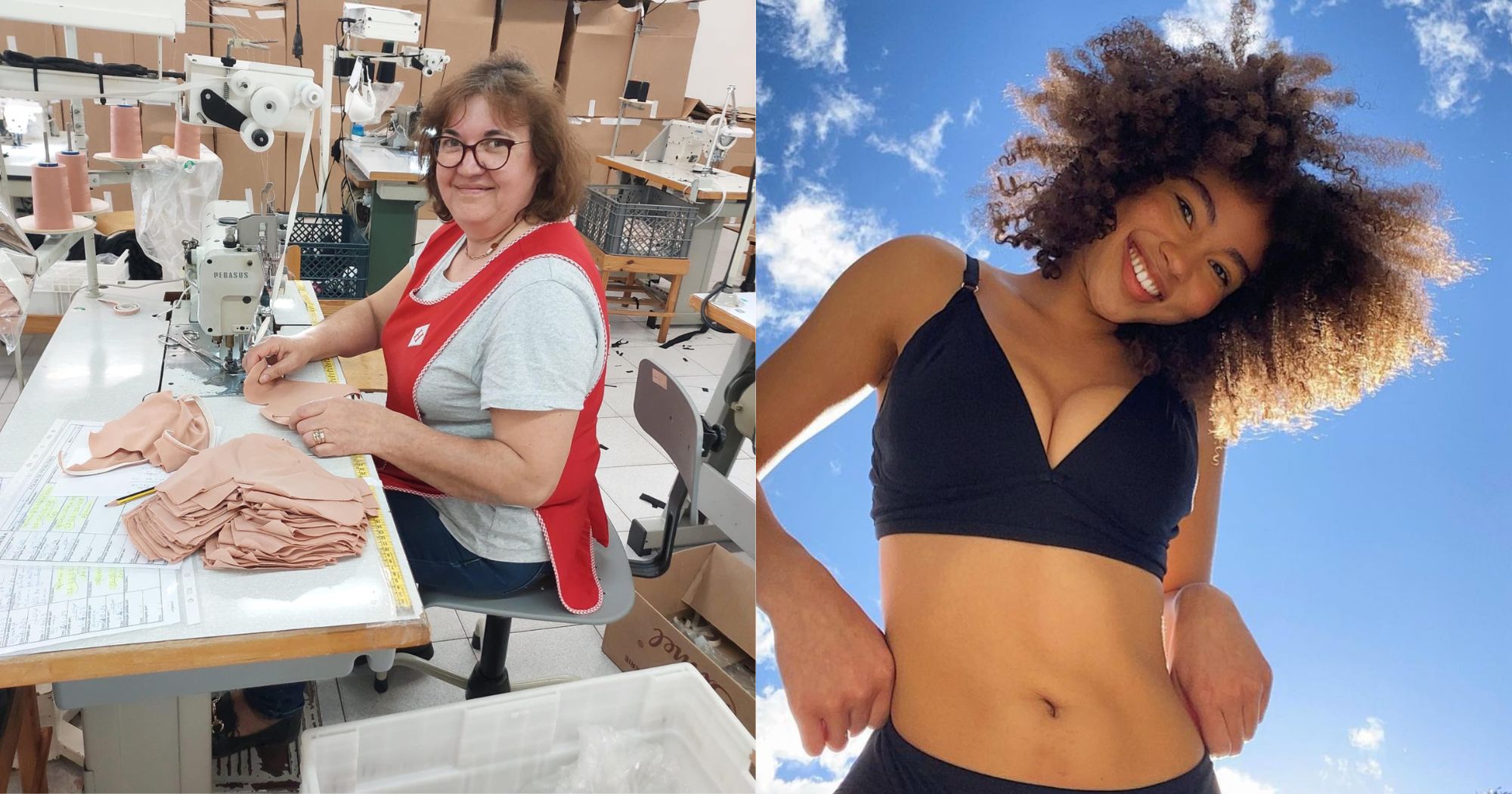
The Inspiring Journey of The Very Good Bra, the world's first Circular Economy bra

Congratulations for being named as one of the runner ups of eBay’s Circular Fashion Fund, can you tell us a bit about what’s next for the Very Good Bra?


I’m delighted to have been a winner in this competition! Right now I have a 200 year old factory in Germany working on making 100% organic cotton broderie anglaise knit to allow us to make something super pretty. I’m also able to custom make some world-first tencel and tree rubber elastic which is expensive and has high minimum quantities. 

Plus I’m going to start focus groups to potentially launch a teen/trainer bra as much as an education tool as to mitigate waste in a high-waste sector. We recently tackled Nursing Bras and this quickly became our 3rd best-selling product which is great, the average nursing mum goes through 4 and they all end up in landfill.

In addition, we are working with a team of experts developing a world first Australian Standard for Textile Composting which is very exciting.


What drives your commitment to sustainable business practices?

This business was founded with the mission to pioneer the world's first plastic-free bras, briefs, and sleepwear. That core objective remained unchanged from its inception, requiring no pivot or reinvention. The primary goal was always to create botanically circular clothing.

My passion for nature and the environment grew as I delved deeper into the textile industry, realising the magnitude of its environmental impact. I am driven to make a positive difference by reducing micro-plastics in our oceans, minimising air pollution, and decreasing landfill waste. Through The Very Good Bra, I aim to showcase a new approach to clothing design and manufacturing—one that is environmentally friendly and attainable for many.
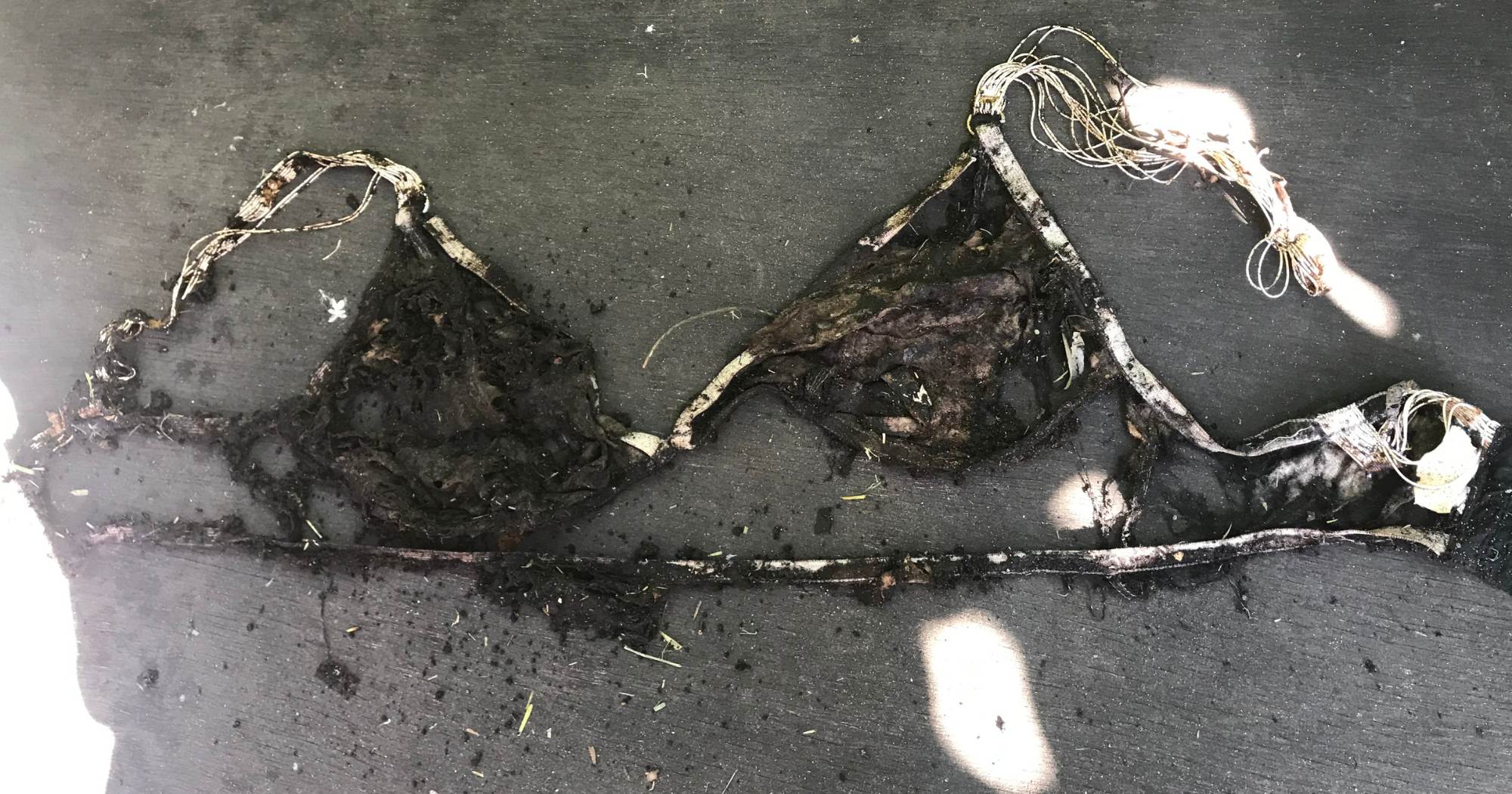
The Very Good Bra is compostable and will breakdown in a worm farm


What do you envisage as being the wardrobe of the future?

 A smaller one I hope! I love clothes, but I think fashion has to focus on enduring style and quality that is not faddish and short-term. 

More than 60% of our clothing is currently polyester, which is oil, and we need to use more natural fibres which are low impact throughout their lifecycle in order to curtail the disastrous effects our clothing choices are having on the planet. Smaller, smarter, cleaner! 

Discover more about eBay's Circular Fashion Fund here, or stay informed about The Very Good Bra’s progress through their social media channels or official website.
AFC Highlights from 2023: Guiding the Just Transformation of our Industry

As we approach the conclusion of yet another year, we're taking the time to pause and celebrate the milestones achieved for our industry, all made possible through the unwavering support of our dedicated AFC Members, Patrons, and Partners. Together, we're driving a transformative journey toward a socially, environmentally, and economically prosperous circular economy by 2030, aiming for Net Zero by 2050. 

Thank you to our AFC Members for being integral to this journey — Join us in reflecting on some of our favourite milestones that defined 2023:

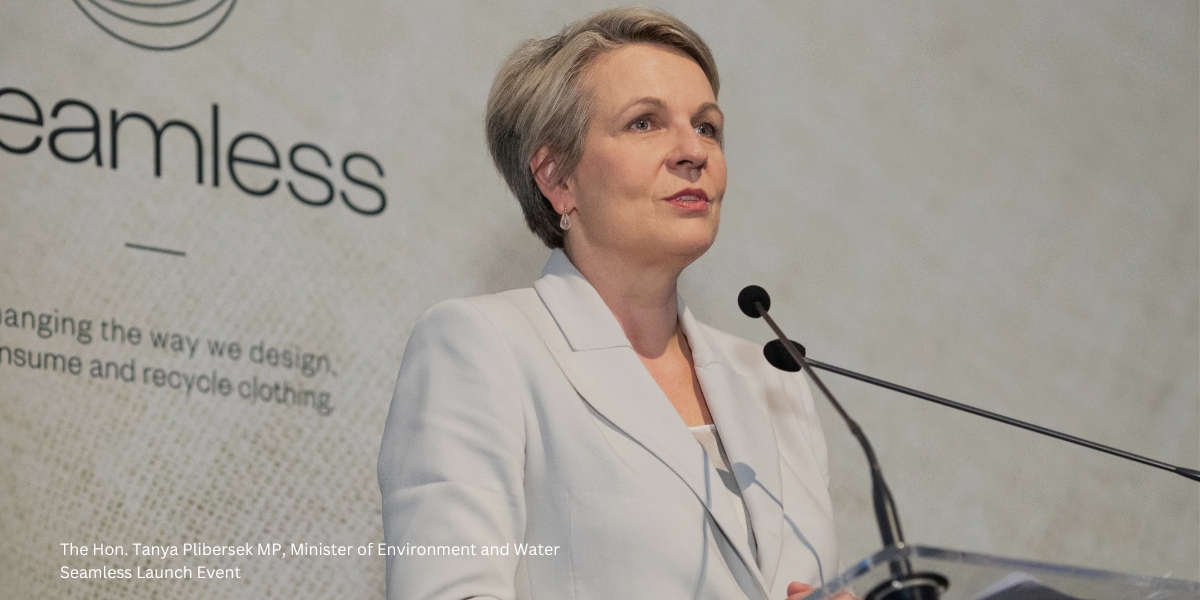
Launched Seamless Design & Roadmap, Australia’s National Clothing Stewardship Scheme: The Hon. Tanya Plibersek MP, Minister of Environment and Water, launched the design and roadmap for Seamless - a plan to revolutionise how clothing is made, used, and recirculated in Australia, striving for clothing circularity by 2030.

Launched ‘Advancing a Creative Industries Precinct for Sydney’ Report: Collaborating with the University of Technology Sydney, Minister John Graham, the Powerhouse Museum, and TAFE NSW, the AFC launched a report into the potential of Tech Central's anchor institutions in fostering a dynamic innovation ecosystem. 

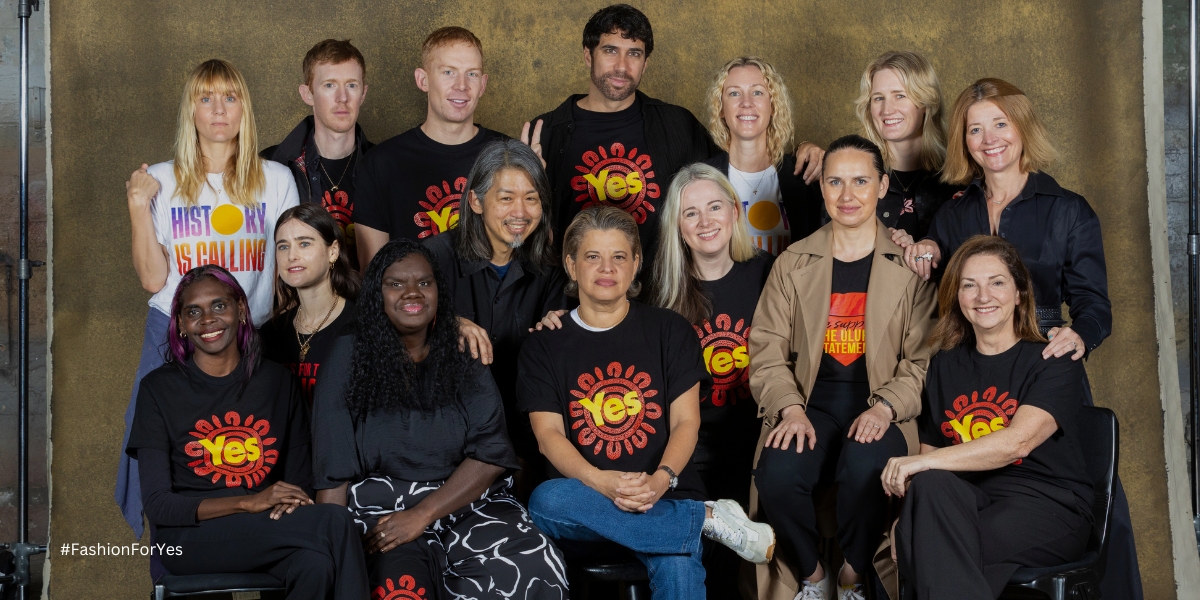
Continued Support for First Nations People and Reconciliation: The AFC collaborated with industry leaders, brands and changemakers to launch #FashionForYes, uniting individuals who are committed to acknowledging First Nations' perspectives.

Joined the CSIRO Chief Scientist Expert Advisory Group:  An opportunity to represent our industry and offer impartial, external guidance to CSIRO regarding the national challenges and opportunities within our sector.

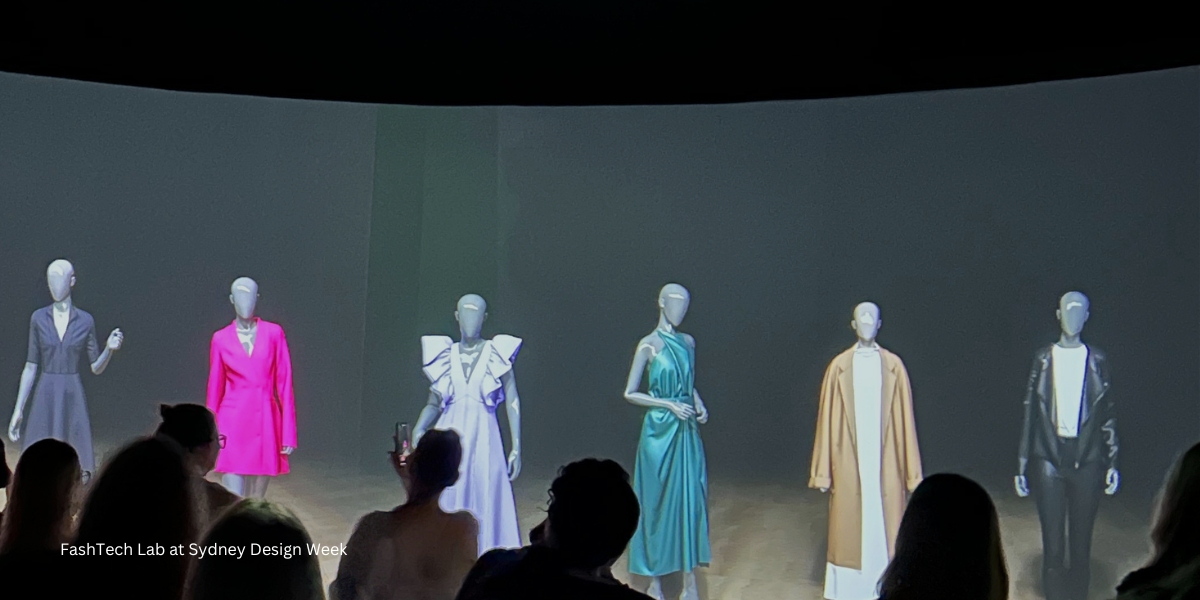
Second Pilot for FashTech Lab: Supported by City of Sydney, AFC partnered with leading Australian fashion brands and tech partners for FashTech Lab's second pilot, achieving notable milestones:

National Reconstruction Fund Industry Working Group Seat: Secured a seat in the ‘National Reconstruction Fund Industry Working Group’ to enhance local manufacturing capabilities in the fashion and textiles industry, aligned with government priorities.

Participation in the 'Inquiry into Perceptions and Status of VET': Committed to skill-building and creating career pathways, we contributed to the inquiry, fostering growth within our industry.

Melanie Levis' Nomination for 'ITAB Board of Management': AFC member Melanie Levis of Cue accepted a nomination to represent AFC at Manufacturing Skills Australia's 'ITAB Board of Management,' contributing to the development of local manufacturing capabilities in NSW.

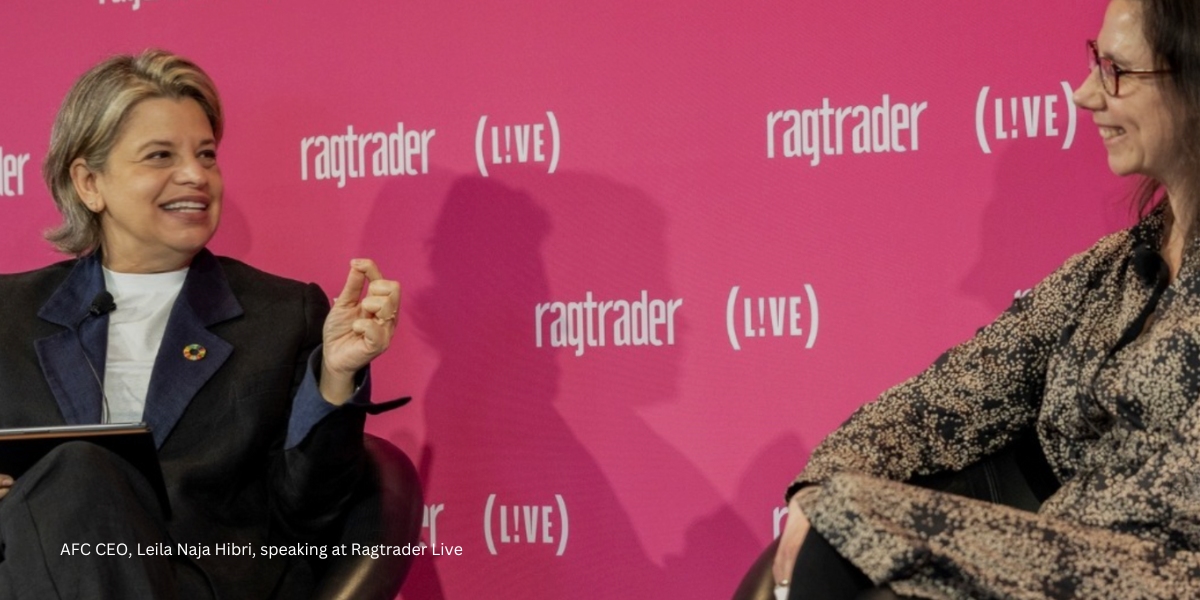
Engagement in Notable Speaking Opportunities: The AFC had the privilege of sharing insights at notable events including the Ethical Consumer Report Webinar hosted by Baptist World Aid and Be Slavery Free, the Circular Economy Show presented by the Ellen MacArthur Foundation, the Sustainable Fashion Roundtable at NSW Parliament House convened by the Hon. Dr. Sarah Kaine MLC, as well as Ragtrader Live, Global Sourcing Expo, International Apparel Federation’s (IAF) World Fashion Convention in Philadelphia, Circularity Live and more.

Not yet a member? Join us to unlock exclusive resources and events, connect with our professional network, and contribute to the future of a sustainable and innovative industry. The AFC is proud to contribute 5% of membership fees to the Indigenous Fashion Fund, launching in 2024.

Seamless announces inaugural CEO and Board of Directors

The AFC is proud to support Seamless as it enters its next phase, welcoming the announcement of its new CEO and Board of Directors. We look forward to continuing our support for the new organisation, as well as current and future members, in 2024.

Seamless appoints new CEO, Ainsley Simpson

The recently formed Seamless Board, today announced the appointment of its inaugural CEO Ainsley Simpson, effective from 4 March 2024. Seamless is about creating a sustainable fashion future for the Australian clothing industry by transforming how clothing is made, used, reused and recycled in Australia.

In speaking about the CEO appointment Seamless Board Independent Chair, Rosanna Iacono, said.

‘As a respected, inclusive and values-driven business leader, Ainsley is an outstanding choice to champion our ambitious vision. She brings a wealth of strategic leadership experience and proven ability to drive sustainability best-practice, building strategic partnerships spanning government, business and industry peak bodies for intergenerational impact’.

Deeply familiar with driving sectoral change, Ms Simpson is currently the CEO of the Infrastructure Sustainability Council, a purpose-led not-for-profit, assuring economic, social and environmental outcomes for over $290 billion infrastructure investment across Australia and New Zealand. She has amplified the organisation's impact, serving a member base with a combined annual turnover of more than $50 billion.

Ms Simpson has worked in executive roles in public and private sector organisations, and holds non-executive roles on other not-for-profit boards and global committees which systematise continuous improvement and inform policy leadership so people, nature and nations thrive.

“This appointment marks the start of an exciting new chapter, and the board looks forward to working with Ainsley to drive responsible change toward effective clothing stewardship and circularity by 2030’, said Ms Iacono.

Commenting on her appointment, Ms Simpson stated “It is a privilege to be leading this important work on behalf of the founding and future members who are at the forefront of circularity in Australia; and contributing to transforming the way clothing is made, enjoyed and recirculated on a global scale’.

“My immediate priorities will be meeting our existing and imminent members and activating initial outcomes across our four strategic objectives; circular design, circular business models, closing the loop and citizen behaviour change.

The appointment represents a major milestone toward activating clothing stewardship in Australia.

Seamless Board of Directors

The Seamless Board is made up of a representative from the Australian Fashion Council and nominated representatives from each of the eight Seamless Foundation Members :

The Board is also currently recruiting two independent directors that will bring relevant specialist knowledge and skills across the clothing supply chain from clothing design, reuse and recycling and an independent director acting as Guardian of Nature, that will bring relevant specialist knowledge and skills in relation to the natural world and the non-human species that inhabit it and/or social impact.

Brands are encouraged to register their interest to remain up to date with Seamless.

Progress Update: Seamless Completes Phase One, Achieving Key Milestones.

The National Clothing Stewardship Scheme, Seamless, is a first of its kind and aims to transform how clothing is made, used and recirculated in Australia to achieve clothing circularity by 2030. 

On October 28, 2023, the Seamless Transition Advisory Group (TAG) concluded its fourth and final meeting, passing the baton to the new independent not-for-profit stewardship organisation under the oversight of the Board of Directors.

Since its establishment in June 2023, TAG members have demonstrated remarkable dedication to establishing a new entity in line with the transition plan's first stage. 

“The core goal of Seamless is creating a circular clothing industry by 2030, where responsible stewardship and citizenship are embedded across the entire clothing lifecycle.” – AFC CEO, Leila Naja Hibri said. 

Key achievements of the Seamless TAG to date:

“Change starts with all of us, and industry collaboration is a huge part of making the greatest impact,” said Michelle Pacey, General Manager for Product. “Cotton On’s partnership with Seamless is an important step in the right direction as we work together with other brands to find industry-wide sustainable solutions.” 

The TAG is made up of Foundation Members of Seamless along with a range of clothing supply chain specialists including NSW Environment Protection Authority, Charitable Recycling Australia, and Waste Management and Resource Recovery Association. 

The clothing industry was further represented by A.BCH, Bassike, Future Fashion Agency, and the Australian Fashion Council. 

“The diverse thinking and thoughtful contributions of all TAG members have resulted in the development of a Constitution and the appointment of an Executive and Governance Board where joined-up thinking and action will underpin the delivery of ambitious industry transformation and optimal outcomes for all key stakeholders” – said Rosanna Iacono, Independent Chair of the Seamless TAG

In November, the newly formed Seamless Board will initiate the selection of an independent Chair, Directors, and the CEO.

Brands are encouraged to register their interest to remain up to date with Seamless.

Discover the Melbourne Fashion Week Conversation Series

We are excited to support three inspiring Conversations for this year's Melbourne Fashion Week. Presented by Creative Victoria, this year's Conversations moderated by Janice Breen Burns will explore the potential of circular fashion design in Melbourne, new-age fashion tech careers and the era of transparency and connection in the fashion supply chain.

AFC Project Director, Danielle Kent will be joining Conversation One: Circular Fashion in Melbourne to talk about Seamless, Australia’s first Clothing Product Stewardship Scheme, creating a roadmap to circlarity by 2030.

MFW Conversation Series will take place on Wednesday, October 25th at Wesley Place.

CONVERSATION ONE: CIRCULAR FASHION IN MELBOURNE
9:00am - 9:45am

Motivated by the environmental impact of fashion, many in the industry are embracing the idea of circular design. Examining whether our city can make the change, this panel will compare circular economy principles to Melbourne’s fashion industry in relation to the wider global practice.

Panelists: Dr. Vaibhav Gaikwad (Head of Sustainability and Ethics, ELK), Danielle Kent (Project Director, Australian Fashion Council) and Lauren Hart McKinnon (Studio Manager, Future From Waste Lab)

Buy Tickets.

CONVERSATION TWO: FASHION TECH CAREERS
10:15am - 11:00am

Get ready to expand your horizons beyond conventional career paths in fashion – think workshops and runways. Pioneers of virtual reality, gaming, and technology will share how they’re carving new niches in the industry.

Panelists: Estelle Michaelides (Micky In The Van and Saint Stella M), Dan Tse (INJURY) and Darren Vukasinovic (Artist)

Buy Tickets

CONVERSATION THREE: TRACKING CHANGE
11:30am - 12:15pm

Technology is ushering in a new era of transparency and connection in the fashion supply chain. Hear from local designers who are leveraging the emerging possibilities of the digital revolution, from authenticity tracking and tracing fiber origins to forging direct links between brands and consumers.

Panelists: Marcus Crook (HoMieREBORN), Saskia Fairfull (Founder, Metarial),
Rebekah McQuoid (Development Manager, FibreTrace) and Mark Scott (Program Manager, Woolmark)

Buy Tickets


Save 20% by purchasing the MFW Conversations Bundle and gain access to all three discussions. View the full Melbourne Fashion Week program here.

Progress Update: Seamless breaks new ground appointing new independent Director

The National Clothing Stewardship Scheme, Seamless, aims to transform how clothing is made, used and recirculated in Australia to achieve clothing circularity by 2030.

On 28 September 2023, the Seamless Transition Advisory Group (TAG) had its third meeting with a clear objective to progress the establishment of the Product Stewardship Organisation (PSO) through the development of a new Constitution and Board of Directors. 

Foundation members of Seamless; Big W, David Jones, Lorna Jane, Rip Curl, RM Williams and THE ICONIC, along with a range of clothing supply chain specialists including NSW Environment Protection Authority, Charitable Recycling Australia and Waste Management and Resource Recovery Association attended the meeting.

The clothing industry was further represented by A.BCH and the Australian Fashion Council.

The latest Foundation member, Sussan Group, joined the meeting for the first time. 

“The Sussan Group is looking forward to helping shape the conversation and recommendations for the proposed scheme. We are excited to be working alongside our Seamless partners on potential solutions to solve the issue of textile waste” said Rebecca Hard, Sussan Group CEO. 

The newly created Constitution establishes a robust framework with clear objectives related to clothing circularity and outlines the role of supply chain stakeholders in the governance of the organisation.

Notably, the new Seamless PSO is breaking new ground in Australia by appointing an independent director responsible for serving as a Guardian of Nature. This dedicated role is focused on representing the interests of nature, all species, and the environment as a whole.

“I commend the Transition Advisory Group for embracing a progressive approach in the establishment of the constitution, ensuring that the organisation will be genuinely focused on positive outcomes for planet, people and economy and inclusive in the breadth of stakeholders whose voices will be heard in the delivery of strategy,” said Rosanna Iacono, Independent Chair of the Seamless TAG.  

The TAG’s next meeting is scheduled for 26th October 2023 to finalise its role in the establishment process and to handover to the newly established PSO and its Board.

Register your interest.